
August Newsletter
Hello fellow game fishers,
Throughout August, we have all been feeling the effects of record temperatures. Our lakes and rivers have been running at low levels, and the sustained heat has made conditions particularly challenging. Alongside the reduced water levels, oxygen content has also dropped significantly, creating extra pressures on fish health and wellbeing. The rain has at last arrived in the last few days and I am hoping that September will be a different story.
However, during this hot spell our favourite Trout and salmon (salmonids) are particularly vulnerable. Unlike most coarse fish, they require a much higher level of dissolved oxygen to survive.
High Oxygen Demand: Trout and salmon have a much higher cold-water metabolism, which means they need more oxygen to function normally.
Critical Thresholds: They generally require oxygen concentrations of at least 80% saturation. Levels below 65% can be lethal.
Temperature Effect: Once water temperatures rise above 25–26°C, trout face a dangerous combination: oxygen levels fall, while their metabolism (and oxygen demand) increases.
The Result: A severe imbalance—low oxygen supply against high oxygen demand—creates extreme stress. In these conditions, trout may be seen gulping at the surface in an effort to survive.
So, in summary it is useful to consider the following:
Avoid fishing in the middle of the day when oxygen levels are lowest.
Handle fish carefully and keep time on the bank short.
Carry a thermometer – if water is excessively warm, consider postponing your session.
Winterbourne Zelston
Not surprisingly, there has been hardly any fishing but there has been a significant increase in Canada geese activity. These birds are grazing heavily on the banks and fouling the water, which is worsening water quality and increasing nutrient load. Excess nutrients from goose droppings can encourage algae blooms, further reducing oxygen levels and making conditions even tougher for our fish stocks. To make matters worse there has been a sighting of an otter just recently.
Rawlsbury
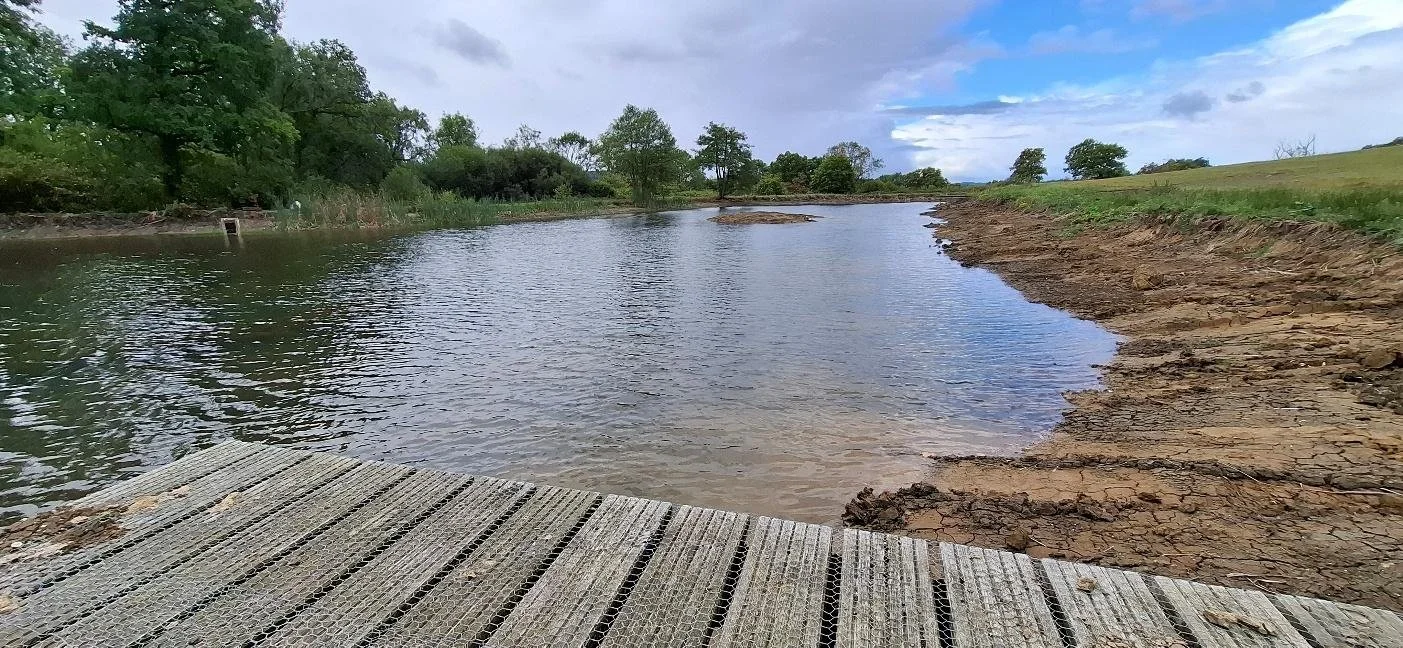
Following the removal of silt and further groundwork profiling of Chapmans lake the water levels are at long last improving but remain well below normal levels.
I will be restocking Chapmans at the end of the week but be aware that when fishing you will likely be using the banks because the jetties are still too high above the lake. The banks are firm enough at the moment but if much more rain arrives, they may become softer and difficult to navigate, so take great care!
During the month we carried out some water chemistry tests with the following results.
Temperature: 19.9°C
Dissolved Oxygen: 9 mg/L (≈ 88% saturation – healthy for fish)
pH: 7.5 (slightly alkaline – nothing to worry about)
Nitrates: 0.0 mg/L (surprisingly low)
Phosphates: 0.0 mg/L (so no nasty signs of human waste or detergents)
KH (Carbonate Hardness): 6 drops – showing good buffering capacity, meaning the lake can resist sudden swings in pH.
Conclusion: The chemistry looks sound, and oxygen levels are decent for this time of year. Any weed growth seems to be more about the freshly disturbed sediment and natural recovery than pollution.
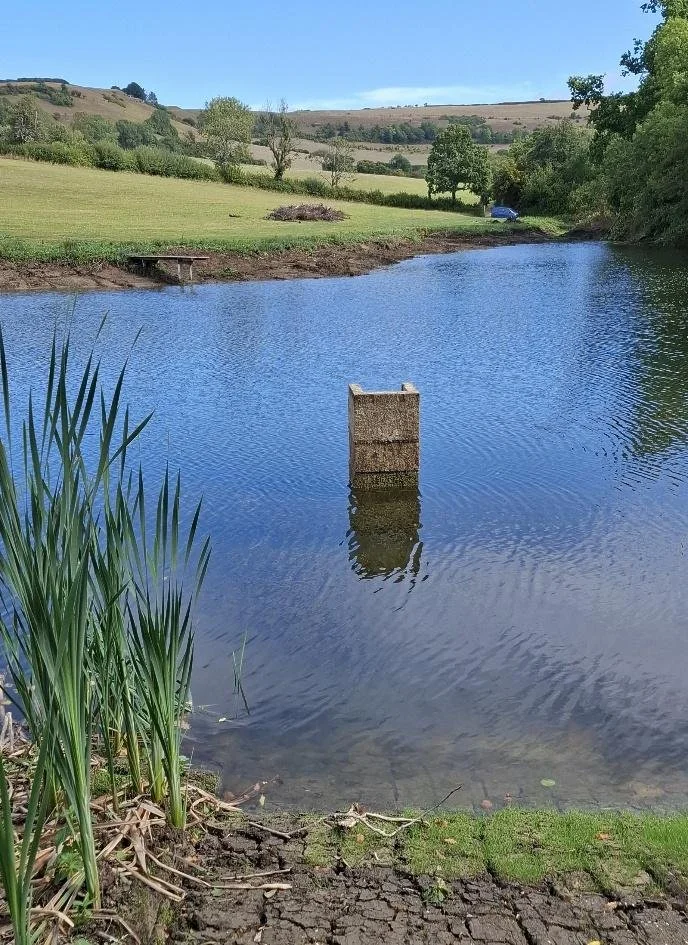
Over at Cowleaze Lake, conditions are looking fairly encouraging compared with Winterbourne Zelston. Recent water chemistry checks gave the following results:
Temperature: 18.9°C
Dissolved Oxygen: 9.5 mg/L (≈ 92% saturation – excellent for fish health)
pH: 7.25 (a comfortable, near-neutral level)
Nitrates: 0.0 mg/L (very clean – no fertiliser or runoff issues detected)
KH (Carbonate Hardness): 7 drops – right in the desirable 5–8 range, showing good buffering ability to resist sudden changes in pH
A final thought. Don’t forget to sign in at the farm before going down the track to Rawlsbury.
Tight lines,
Paul.