
Fly Fishing for Trout: A Beginner’s Guide for WDAC Members
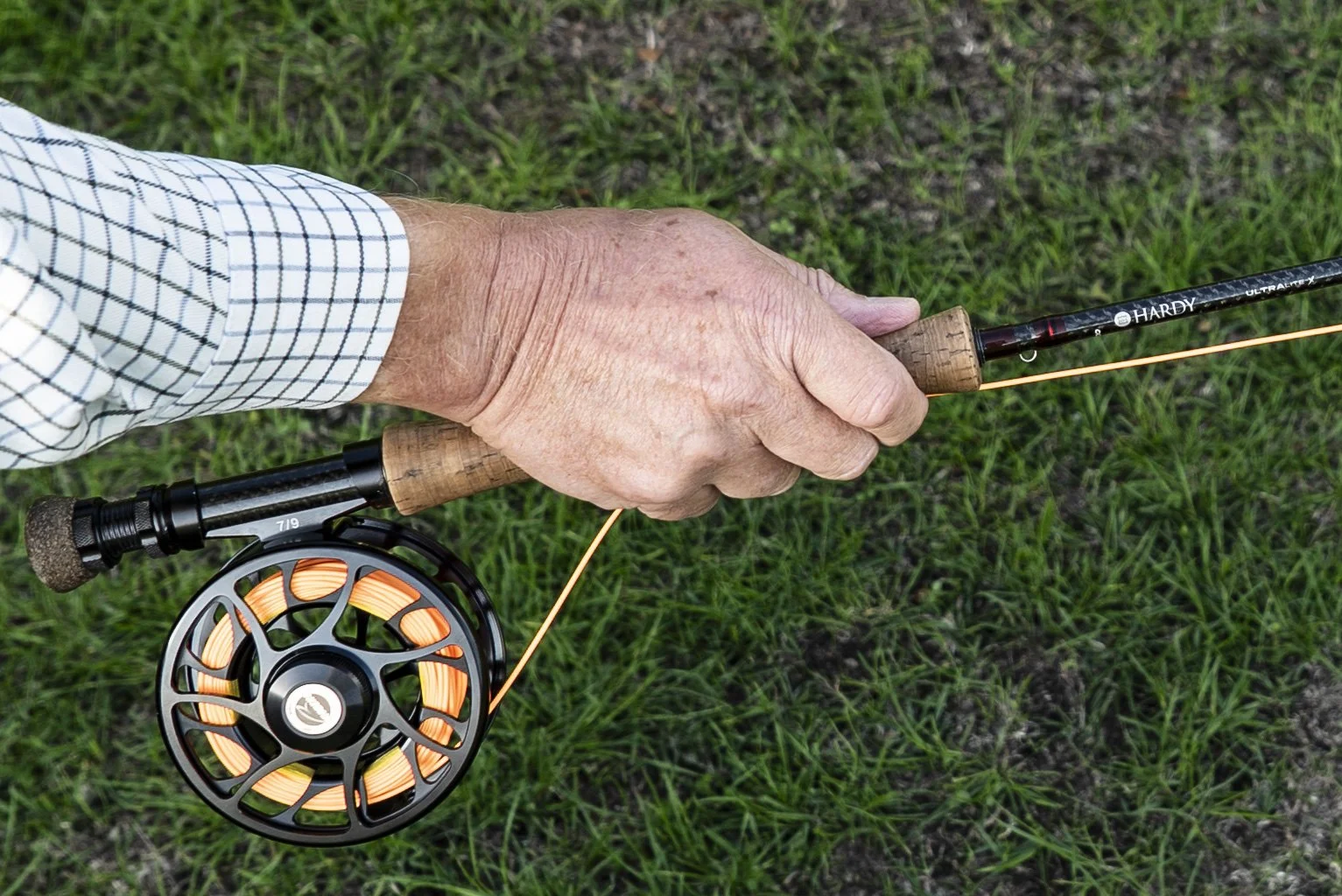
Ready for Action
Fly Fishing for Trout: A Beginner’s Guide for WDAC Members
Hi and welcome to what I hope will be the first of many blog posts for our new website. I’m Gordon Wray a GAIA certified professional fly fishing instructor and I’m also proud to be the club’s new Media Officer. I thought I’d kick off the new blog with my speciality.
Fly fishing for trout is one of the most rewarding and absorbing forms of angling available to members of Wimborne & District Angling Club. Whether you are transitioning from coarse fishing or completely new to the sport, game angling offers a unique blend of skill, observation and connection with the water. With access to two well-managed stocked fisheries and the River Stour, WDAC provides an excellent environment for beginners to learn and develop.
Understanding the Basics of Fly Fishing
At its core, fly fishing is about presenting an artificial fly in a natural way so that a trout believes it is real food. Unlike coarse fishing, where bait often remains static, fly fishing involves constant movement, control and finesse. While it may seem technical at first, the basics are surprisingly accessible with the right approach.
Essential Gear for Beginners
To get started, you will need a balanced setup. A standard beginner outfit typically consists of a nine-foot fly rod rated for a five or six-weight line. This versatile setup is ideal for stocked trout waters commonly found within club fisheries. The reel should be simple and reliable, holding a floating fly line and some backing. A weight-forward floating line is the best choice for beginners as it is easier to cast and suitable for most situations you will encounter early on. Before buying an outfit you should try different weights and lines, I’ll be writing another blog on equipment soon.
Attached to your fly line is a leader, usually tapered, which helps transfer energy from the cast to the fly. At the end of the leader sits the fly itself. For stocked trout waters, patterns such as nymphs, buzzers and small lures are consistently effective. These imitate natural food sources like insects, larvae and small fish. As a beginner, it’s best to carry a small selection rather than overcomplicating your choices.
Learning the Basic Cast
Casting is often seen as the biggest hurdle, but it becomes intuitive with practice. The fundamental principle is to use the weight of the line to load the rod. A basic overhead cast involves smoothly lifting the line from the water, pausing briefly as it travels behind you, and then accelerating forward to deliver the fly. Timing is much more important than power. Many beginners try to force the cast, but a controlled, steady rhythm produces far better results. Practising on grass before heading to the water can significantly improve confidence. We are fortunate to have some professional casting instructors in our membership who offer generous discounts for members. Email me for details
Reading the Water and Trout Behaviour
When you arrive at a stocked trout fishery, observation should be your first priority. Take time to watch the water for signs of activity. Rising fish, surface disturbances or subtle swirls can indicate feeding trout. Weather conditions also play a role. Overcast days often encourage fish to feed more confidently near the surface, while bright conditions may push them deeper.
Choosing your spot is another key element. Trout are sensitive to movement and vibration, so a quiet, deliberate approach will improve your chances. Casting across or slightly into the wind can help maintain control of your line and improve safety. Begin by covering the water methodically rather than repeatedly casting to the same spot. This is called fan casting.
Effective Techniques for Stocked Trout Waters
Retrieval technique is crucial when fishing stocked waters. Unlike wild trout, stocked fish often respond well to movement. A slow, steady retrieve using short pulls of the line can be very effective when fishing lures or nymphs. If fish are feeding near the surface, allowing a fly to sit still or gently twitch can trigger takes. Varying your retrieve until you find what works on the day is a good habit to develop.
Playing and Landing Trout
Striking and playing a trout requires a balanced touch. When you feel a take, a firm but controlled lift of the rod is enough to set the hook. Once hooked, allow the fish to run while maintaining steady pressure. Avoid rushing the process. A smooth fight not only reduces the risk of losing the fish but also ensures it is landed humanely and in good condition.
Fish care is an important part of game angling and something WDAC strongly encourages. Always use a landing net, wet your hands before handling fish and return them gently if practising catch and release at Viners Lake at Rawlsbury. Respect for the fish and the environment ensures the quality of our venues for all members.
Building Confidence and Enjoyment
Fly fishing can feel challenging in the early stages, but it is also incredibly rewarding. Each session brings new learning, from understanding insect life to reading water conditions. WDAC members benefit from a supportive angling community and access to varied waters that make developing these skills both enjoyable and achievable.
With patience, practice and a willingness to learn, fly fishing for trout becomes far more than just a method of catching fish. It becomes an engaging and immersive experience that keeps us coming back for more.
If there’s a subject you’d like me to cover in the blog then do get in touch. Or better still write one of your own and we’ll publish it here on the new site…don’t forget those photos!
Tight Lines,
Gordon