
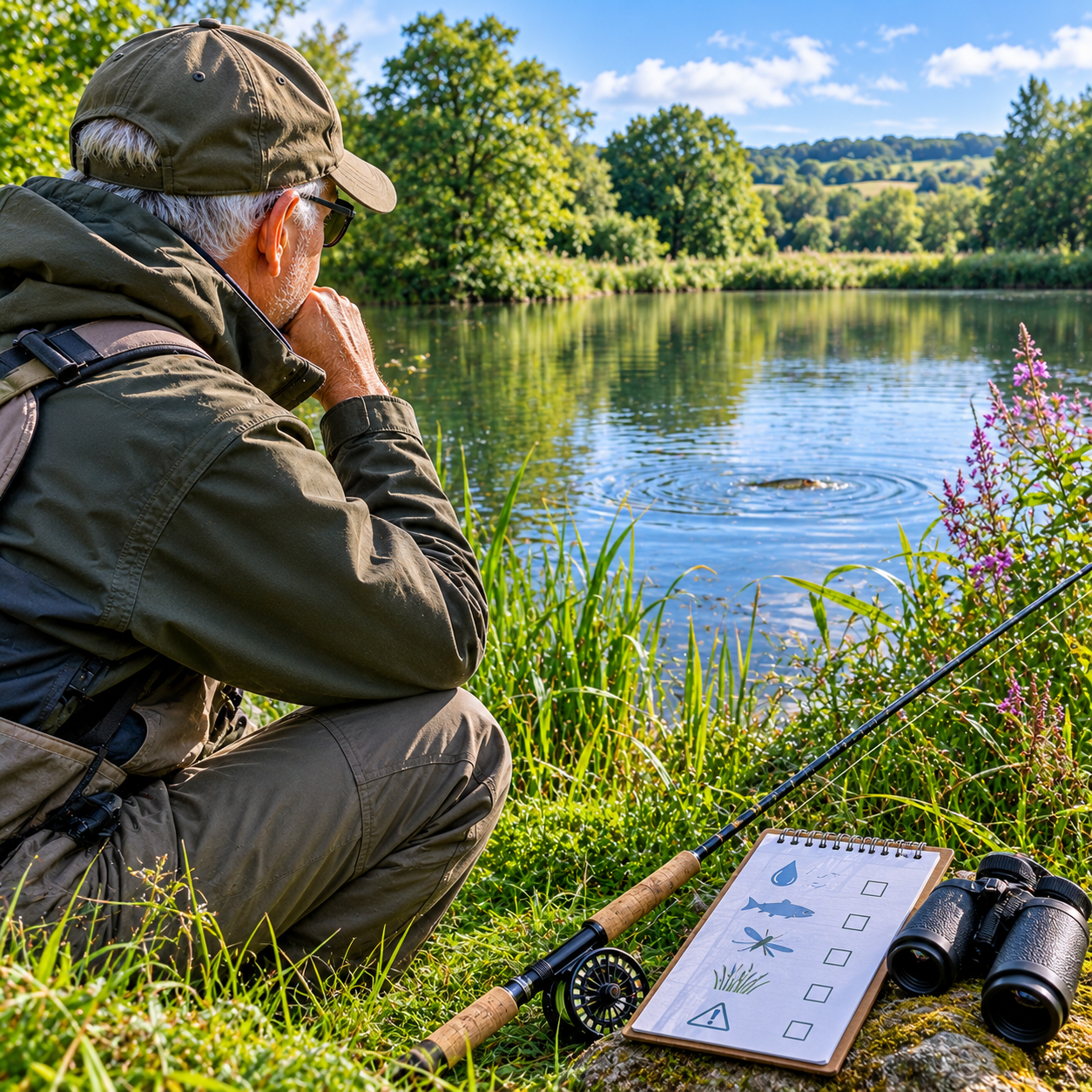
Every visit tells a story
When we visit one of our fisheries, it's natural to concentrate on the fishing. We think about the species we're hoping to catch, the bait and tactics we're going to use, the conditions and, hopefully, the prospect of a successful day.
But there's much more happening around us than the activity at the end of our line. Every visit provides an opportunity to learn something about the water, the fish and the wider environment. Sometimes, the smallest observation can tell us something important about the health of a fishery.
As members of Wimborne & District Angling Club, we all have a part to play in looking after the waters we enjoy. That responsibility doesn't begin and end with following the fishing rules. It also means taking an interest in what's happening around us and sharing anything that might help the club manage and protect its fisheries.
Learning to read the water
Experienced coarse anglers often develop an instinct for recognising changes in a fishery. They notice when the water looks different, when weed growth becomes more extensive, when fish appear to be feeding in unfamiliar areas or at unusual depths, or when previously productive swims seem less active.
These observations are valuable, particularly when they are made over time.
Water clarity, water levels, temperature and the condition of the bankside vegetation can all provide clues about changing conditions. A sudden change in water colour, an unusual smell or an unexpected accumulation of debris may be worth reporting.
It doesn't mean that every change is a cause for concern. Natural fisheries are constantly changing with the seasons, weather and other environmental conditions. The important thing is learning to recognise what is normal and noticing when something seems out of the ordinary.
What are the fish telling us?
The behaviour of fish can also provide useful information.
Are carp showing regularly on the surface? Are bream feeding in the open water? Are tench becoming active in the margins? Are roach and rudd appearing in areas where they wouldn't normally be expected?
Changes in feeding activity and fish behaviour can have many explanations. Weather, temperature, available natural food, spawning activity and fishing pressure can all influence how and where fish behave.
It is important not to jump to conclusions, but unusual behaviour, particularly if accompanied by signs of distress, fish gasping at the surface or dead fish, should always be brought to the club's attention promptly.
A member's observation may be the first indication that something needs investigating.
There's a whole world beneath the surface
Our fisheries are much more than collections of fish. They are living environments, with aquatic insects, plants, invertebrates and other wildlife all contributing to the natural balance.
For coarse anglers, the abundance of natural food is particularly interesting. Bloodworm, aquatic insect larvae, snails, freshwater shrimps and other invertebrates provide an important food source for many species. Their presence and seasonal activity can influence where fish feed and how they behave.
Aquatic vegetation, for example, provides shelter and habitat for countless small organisms. It also offers cover for fish, creates natural feeding areas and contributes to the overall structure of the fishery.
Not every weed-covered area is a problem, just as clear water doesn't automatically mean a healthy fishery. Understanding the relationship between the different elements is part of responsible fishery management.
The more we notice, the more we appreciate how much is happening beneath the surface.
Spotting problems before they become bigger
One of the most useful things members can do is report anything that appears unusual or potentially harmful.
This might include:
Sudden changes in water colour or clarity.
Unusual smells, surface scum or signs of possible pollution.
Dead or distressed fish, or fish gasping at the surface.
Unexpected changes in water levels.
Significant bank damage or erosion.
Excessive litter or evidence of unauthorised activity.
Unusual changes in aquatic vegetation or wildlife.
Sudden changes in fish behaviour or apparent feeding activity.
These are not necessarily signs of a serious problem, but they are worth bringing to the club's attention.
Where possible, provide a clear description of what you have seen, when it happened and where. A photograph can also be helpful, provided it can be taken safely and without disturbing wildlife or the fishery.
Please report concerns through the club's usual contact channels rather than relying on word of mouth. That way, the information can reach the right people and be followed up appropriately.
Sharing knowledge makes us stronger
One of the great benefits of belonging to an angling club is the experience and knowledge shared among members.
Some anglers have fished our waters for many years and have a detailed understanding of how they change through the seasons. Others may be relatively new to the club but bring fresh eyes and notice things that more familiar visitors might overlook.
Both perspectives are valuable.
A member who regularly fishes a particular lake may notice a gradual change in water clarity or a difference in the condition of the margins. Another might observe that fish are behaving differently, that natural food seems less abundant or that a particular area of the lake is changing.
Individually, these observations may seem insignificant, but together they can build a much clearer picture of what is happening.
Good communication between members and the people responsible for managing our fisheries helps turn these observations into useful information.
A shared responsibility
Looking after our fisheries is not solely the responsibility of the committee, bailiffs or those involved in practical maintenance. They all play important roles, but the wider membership can make a real contribution too.
Respecting the environment, disposing of litter responsibly, handling fish carefully, avoiding unnecessary disturbance to wildlife and reporting concerns are all part of being a responsible angler.
It is also worth remembering that fishery management involves balancing many different considerations. Decisions about stocking, vegetation, water quality and fishery maintenance need to take account of the whole environment rather than one isolated observation.
Members' feedback can help inform those decisions, but it is important that concerns are shared constructively and that appropriate investigations take place before conclusions are drawn.
Next time you visit, take a closer look
The next time you arrive at one of our fisheries, take a moment before tackling up to look around.
Notice the water. Look at the margins, the vegetation and the wildlife. Watch for signs of natural food, take an interest in what the fish are doing and observe how conditions are changing. If something seems unusual, make a note of it and let the club know.
You might arrive hoping to catch a carp, tench, bream or a net of silver fish, but you could also leave with a little more understanding of the environment that supports them.
At WDAC, we want our fisheries to remain enjoyable, healthy and sustainable for present and future members. That requires care, knowledge and a willingness to work together.
Because being an angler is about more than catching fish. It's about understanding the water, respecting the environment and helping to protect the places we love to fish.