
Beating the Cold: Winter Coarse Fishing Strategies
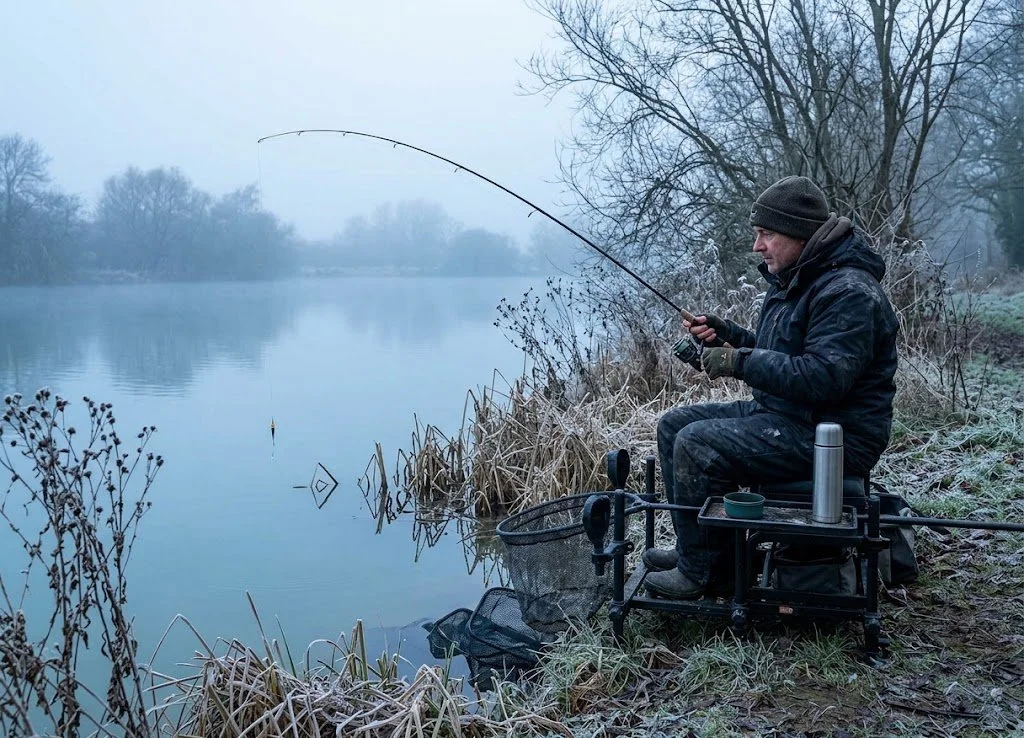
Fishing in Winter
Winter coarse fishing can be one of the most rewarding pursuits in angling. While cold snaps send many anglers into hibernation, those who adapt their approach often enjoy incredible sport with quiet banks, pristine winter conditions, and specimen fish in prime condition. When water temperatures drop, fish become lethargic andheir metabolism slows down drastically. To keep your float dipping and your quiver tip pulling, you need a strategy tailored specifically for cold-water conditions.
Where Are They? Finding the fish is the single most critical factor during the colder months. In summer, fish patrol active feeding lanes across the water column, but in winter they gather in specific, sheltered areas to conserve energy. Deep basins, drop-offs, and areas sheltered from cold northerly winds usually hold warmer, more stable water. Target features such as overhanging trees, marina entrances, undercut banks, and reed beds, as these offer protection and cover for shoaling roach, bream, and chub. Shallow bays that catch early winter sunlight can also warm up by a degree or two by mid-afternoon, which is often enough to trigger a brief feeding spell. If you do not get a response after an hour or two, stay mobile and search the venue until you find where the fish are holdi Finding the fish is the single most critical factor during the colder months. In summer, fish patrol active feeding lanes across the water column, but in winter they gather in specific, sheltered areas to conserve energy. Deep basins, drop-offs, and areas sheltered from cold northerly winds usually hold warmer, more stable water. Target features such as overhanging trees, marina entrances, undercut banks, and reed beds, as these offer protection and cover for shoaling roach, bream, and chub. Shallow bays that catch early winter sunlight can also warm up by a degree or two by mid-afternoon, which is often enough to trigger a brief feeding spell. If you do not get a response after an hour or two, stay mobile and search the venue until you find where the fish are holding.Lighten Up
As water clarity increases in winter, fish become much more line-shy and cautious. Heavy rigs that produced bites in August will often be completely ignored in January, making scaled-down tackle essential. Drop your mainlines and hooklinks down a size or two, utilizing fine fluorocarbon or low-diameter monofilament line to reduce visibility and create a natural presentation. Move down to smaller hook sizes, typically between size 18 and 22 depending on your target species and hookbait. Use delicately balanced floats or light quivertips to detect tiny, hesitant bites, as a fish might only move the bait a fraction of an inch in freezing water.
Bait Sparingly
The biggest mistake anglers make in winter is overfeeding, so mastering the art of micro-feeding is paramount. Once a fish is full on heavy groundbait, your chances of getting a bite drop to zero. The fundamental rule for winter feeding is that you can always put more bait in, but you can never take it out. Introduce tiny amounts of bait, such as a couple of maggots, a few pinkies, or a thimbleful of micro-pellets, every few minutes rather than dumping in large quantities at the start. Low-nourishment, dark groundbaits mixed with fine soil or leam create an attractive cloud and scent trail without filling up the fish, while also blending seamlessly into the lakebed so skimmers and roach feel safe.
Spice It Up
Certain high-attract baits shine much brighter when the mercury plunges. Bread is a classic winter killer; bread punch or liquidised bread creates a highly visible, soft, and easily digestible cloud that roach, chub, and carp find irresistible. Live baits like maggots, pinkies, and squatts provide gentle movement on the hook that entices sluggish fish. Chopped worms release strong natural juices into the water, making them ideal for targeting perch and bream. Because cold water slows down scent dispersion, adding water-soluble liquid attractants or spices like spicy meat or curry powders can give your hookbait a vital edge.
Time is of the Essence
Timing your session correctly can make all the difference, and there is rarely a need to be on the bank at the break of dawn. Water temperatures are frequently at their lowest at sunrise after a frosty night. Plan your sessions around the warmest part of the day, usually between late morning and late afternoon. A slight bump in water temperature around mid-afternoon can trigger an intense, concentrated feeding window. Staying until dusk often pays dividends, as chub and large bream frequently gain confidence to feed as light levels fade.
Layer Up
Looking after yourself on the bank is just as vital for winter success as your tactical preparation. If you are freezing, your concentration drops, you miss subtle bites, and you end up packing up early. Dress in moisture-wicking layers, invest in quality waterproof clothing, and bring a hot flask of tea or soup. By refining your tackle, feeding sparingly, and picking the right venues, winter fishing transforms from a test of endurance into a deeply rewarding seasonal strategy that keeps the net wet all year round.