
When Summer Fades: Preparing for Autumn Coarse Fishing
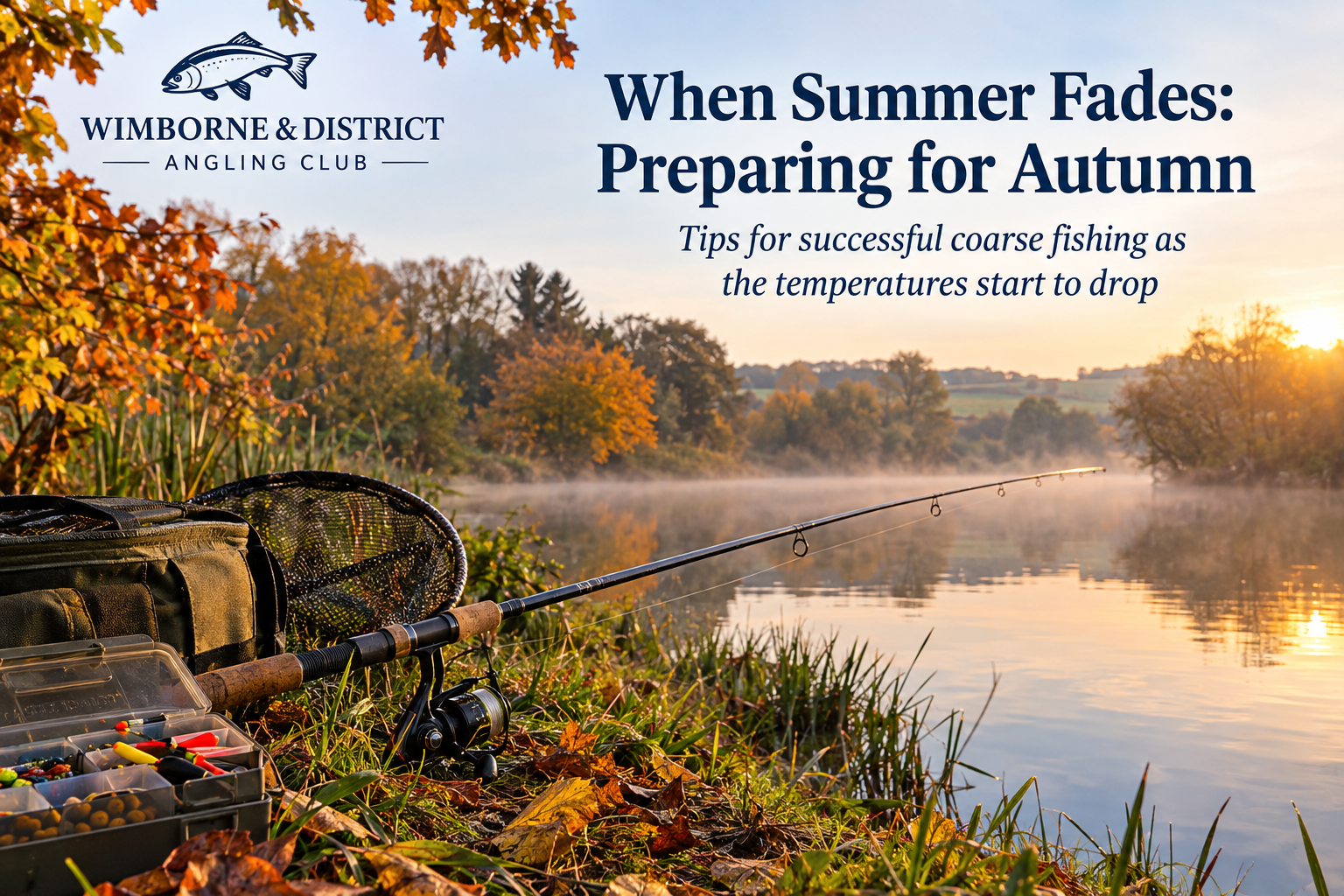
There is a moment every year when you realise that summer has quietly packed its bags and gone. The evenings become noticeably shorter, the early morning warmth has disappeared, the leaves begin to change colour and there is a distinctly different feel to the air. Even the bankside sounds different.
For the coarse angler, this change of season is more than just a reason to dig out the warmer clothing. As the water begins to cool, the fish respond too, and the transition from summer into autumn can be one of the most rewarding periods of the fishing year. For members of Wimborne and District Angling Club, it is also a good time to start thinking about how we are going to approach our waters over the coming months.
The Water Temperature Matters
Fish don't have calendars. They don't know that September has arrived or that October is just around the corner. What matters to them is what is happening in their environment, and water temperature is one of the biggest influences on their behaviour.
As temperatures begin to fall, fish metabolism gradually slows. The frantic feeding that can occur during the warmth of summer becomes less consistent, and feeding periods may become shorter. But that doesn't mean the fish have stopped feeding. Far from it.
Autumn can be an excellent time to fish, particularly during those periods when the water is cooling but has not yet become truly cold. Carp, roach, perch, bream and other coarse species will still be looking for food, but their location and feeding behaviour can change considerably. The important thing for the angler is to recognise that the tactics which worked brilliantly in July may not necessarily be the best choice in October.
Don't Just Fish the Same Way
One of the easiest mistakes to make at this time of year is to arrive at the lake, sit in the same swim and fish exactly as you have been doing all summer. Sometimes it will work. Sometimes it really won't.
Autumn is a season for watching and thinking. Before setting up, take a few minutes to look at the water. Are fish showing? Are there signs of feeding? Is there a particular area receiving the wind? Are fish still in the margins, or have they moved towards deeper water?
Walking the bank before choosing where to fish can be particularly worthwhile. The river can change considerably as summer gives way to autumn, and locating the fish before settling down can make all the difference. A mobile approach, particularly when fishing light tackle, can be extremely rewarding.
In other words, find the fish rather than simply finding a comfortable swim.
Feed Less, But Think More
As the water cools, it is often worth reconsidering how much bait you are introducing. During the warmer months, fish can consume considerable quantities of food. As temperatures fall, however, their requirements change and they may feed in shorter spells.
That doesn't mean you should stop feeding altogether. It means being prepared to adapt. A little-and-often approach can be a sensible starting point. Watch what is happening and let the fish tell you whether they want more.
This is particularly important when fishing a new swim. There is little point putting large quantities of bait into an area simply because it worked there a few weeks earlier. Start cautiously. You can always introduce more; you cannot easily take it back out.
Autumn Can Be a Great Time for Perch
If there is one fish that many anglers should start thinking about as the temperature drops, it is the perch. Perch can become increasingly interesting as summer gives way to autumn, and a change in conditions can bring them onto the feed.
A light, mobile approach can be very effective. Rather than sitting in one place for hours hoping the fish will arrive, try exploring likely features such as weed edges, deeper margins, snags and changes in depth.
And don't overlook the smaller perch. A shoal of modest-sized fish can provide tremendous sport, while those same areas may occasionally hold something considerably larger.
Carp Don't Suddenly Disappear
For the carp angler, autumn can be a particularly exciting time. The fish have enjoyed the warmth of summer and can still feed strongly as the water begins to cool. However, as the season progresses, their behaviour can change.
Early autumn may still feel very much like summer fishing. As October approaches and temperatures fall further, the fish may become less willing to roam widely and more particular about where and when they feed. This is where observation becomes so important.
A bubbling patch, a rolling fish, a disturbance in the margin or a single unmistakable show at distance can be far more useful than simply casting to the same spot because that is where you always fish.
Watch first. Cast second.
It is a simple rule, but one that can save an awful lot of unproductive hours.
The River Comes Into Its Own
Autumn is also a wonderful time to return attention to the River Stour. As conditions change and summer vegetation begins to retreat, the river can take on a completely different character.
Roach, dace, perch and chub are among the species available on our river stretches, and there is something particularly satisfying about roaming a river with a light tackle approach, searching out the fish rather than waiting for them to come to you.
After periods of rain, remember that river conditions can change quickly. Water levels can rise rapidly following heavy rainfall, and paths and banks can become slippery or difficult to access. A quick check of the conditions before setting off can therefore be time very well spent.
Time to Check the Tackle
Autumn is also a good excuse to go through the tackle box. Check your lines and replace anything that has become damaged or weakened. Make sure your hooks are sharp, your floats are in good condition and your landing net is ready for use. Check that your reels are functioning properly and that your clothing is suitable for increasingly changeable conditions.
And don't forget the waterproofs. There is a world of difference between an enjoyable autumn session and a miserable one when the rain arrives and you discover that your supposedly waterproof jacket isn't. The same applies to footwear. Wet banks, fallen leaves and muddy paths can make conditions considerably different from those of high summer.
Prepare for the Shorter Days
It is easy to underestimate just how quickly daylight disappears once autumn gets underway. Give yourself plenty of time when arriving at the fishery, particularly if you are fishing an unfamiliar venue.
Pack a headtorch, even if you don't think you'll need one. Make sure your phone is charged and tell someone where you are going if you are planning a long or late session. Remember too that banks and paths can become slippery as leaves fall and the weather becomes wetter.
Good preparation isn't glamorous, but it makes for safer and more enjoyable fishing.
Enjoy the Change
Perhaps the biggest mistake we can make in autumn is to think of it simply as the period between summer and winter. It deserves better than that.
Autumn coarse fishing has its own character. The light becomes softer, the colours around the water change and the first proper frosts can transform the landscape. A misty morning beside the river can make an ordinary fishing trip feel rather special.
Most importantly, the fish are still there. They are simply doing things differently.
For WDAC members, with such a wide range of waters available, autumn gives us another opportunity to explore our fisheries and perhaps try something a little different.
So, as the temperatures begin to fall, don't pack away the fishing gear. Change it. Adapt it. Watch the water.
And remember that sometimes the best autumn session begins not with a cast, but with five quiet minutes spent standing on the bank and asking yourself one simple question:
Where are the fish today?
Happy autumn fishing to all WDAC members.