
Spot It. Scare It. Log It
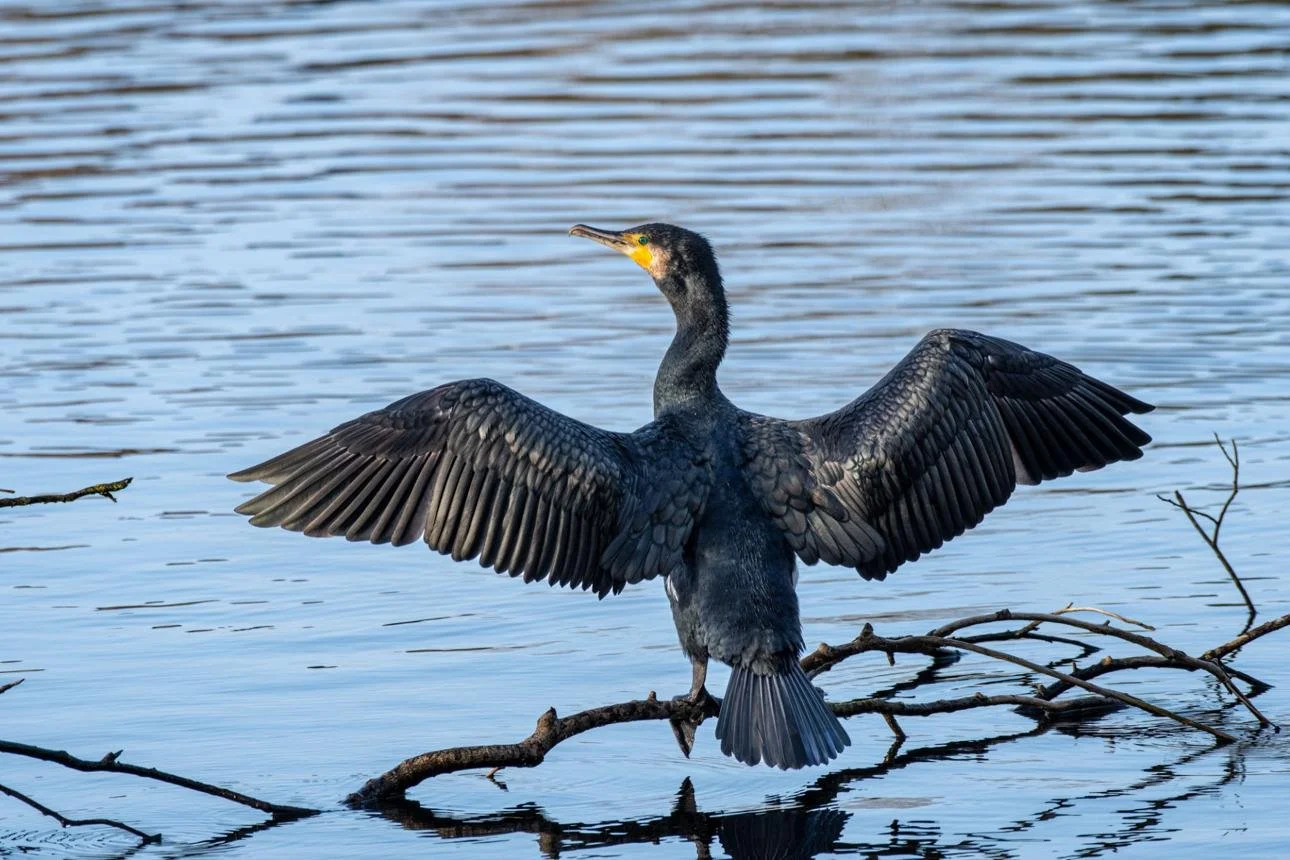
Serve this bird with an ASBO!
Cormorants are Back in Town!
There are some visitors to our fisheries that we are rather more pleased to see than others.
As autumn arrives and the days shorten, you may begin to notice increasing numbers of cormorants appearing on our waters. It can be tempting to regard them simply as another part of the wildlife around our fisheries, but for the Club they represent a very real challenge.
And this is where every member can help.
Why do we see so many cormorants in winter?
The increase in numbers during the autumn and winter is largely due to migration. Around 40,000 cormorants of the continental subspecies Phalacrocorax carbo sinensis arrive from Europe in the autumn and remain until spring, joining the smaller population of resident birds.
That is why you may suddenly start seeing considerably more cormorants on our waters as the colder months approach.
The problem is that these birds are highly effective fish predators. Each bird needs about a kilo of fish every day to survive, and their presence can therefore have a significant impact on our fish stocks. They can also damage fish that they attack, adding further to the overall effect on our fisheries.
So, while a cormorant may look impressive as it sits drying its wings on the bank, its presence is something the Club needs to take seriously.
What is the Club doing about it?
The Club already uses a number of measures to discourage cormorants from settling on our waters.
Deterrents are used from time to time to scare birds away, while strings are placed over Medleys at Edmondsham during the winter to make the water less attractive to them.
The Club also makes use of natural fish sanctuaries. Areas containing water lilies and partly submerged branches can provide fish with places where they can seek refuge. The Club has also experimented with cages using mesh that allows smaller fish to enter while preventing cormorants from getting inside.
But there is another important weapon in the Club's armoury — good information.
Your sightings really do matter
Each year the Club applies for a licence to control cormorants, and one of the most important parts of that application is being able to demonstrate the presence of the birds across the Club's waters.
In other words, simply saying that we have a cormorant problem isn't enough.
We need the evidence.
That is why members are asked to log every cormorant sighting using the Club's website form.
And please don't assume that someone else will have reported it.
Every sighting helps build a picture of where the birds are appearing, how frequently they are visiting and which waters are being affected. The information submitted through the website is automatically forwarded to the Chairman, who can analyse it and use it when preparing the Club's returns to Natural England, the organisation responsible for issuing the licence.
So that quick website report you make after seeing a cormorant on the lake is actually contributing to a much bigger picture.
See a cormorant? Make yourself unpopular!
Members are also encouraged to disturb cormorants when they see them.
There is no need for complicated equipment. Waving your arms and shouting at them will do the job — although whether the cormorant is particularly impressed by the language is another matter!
Flashing umbrellas, rattles or anything else that makes a noise can also be used to encourage the birds to move on.
The important thing is that, once you have disturbed the bird, you log the sighting as well.
Regular disturbance can help deter the birds from settling on a water, and the sighting information also provides valuable intelligence for the Club's licencees.
Every sighting counts
Cormorants can be difficult to control, and shooting them is not always straightforward. Sometimes the safest option for a licencee is simply to shoot to scare rather than attempt to kill a bird.
That makes the information supplied by members even more useful. Knowing where cormorants have been seen recently helps licencees understand where disturbance may be needed.
The more regularly birds are disturbed, the less attractive our waters may become to them.
So, as winter approaches, please keep an eye open.
If you see a cormorant, scare it off if you can, and log the sighting whether you scare it or not.
It takes only a moment, but those moments add up to valuable evidence for the Club.
And ultimately, that evidence helps us protect something we all care about — our fish stocks.
So please remember:
See a cormorant. Scare it. Log it.
Every sighting matters.