
Come Prepared – Give Yourself and Your Catch the Best Chance
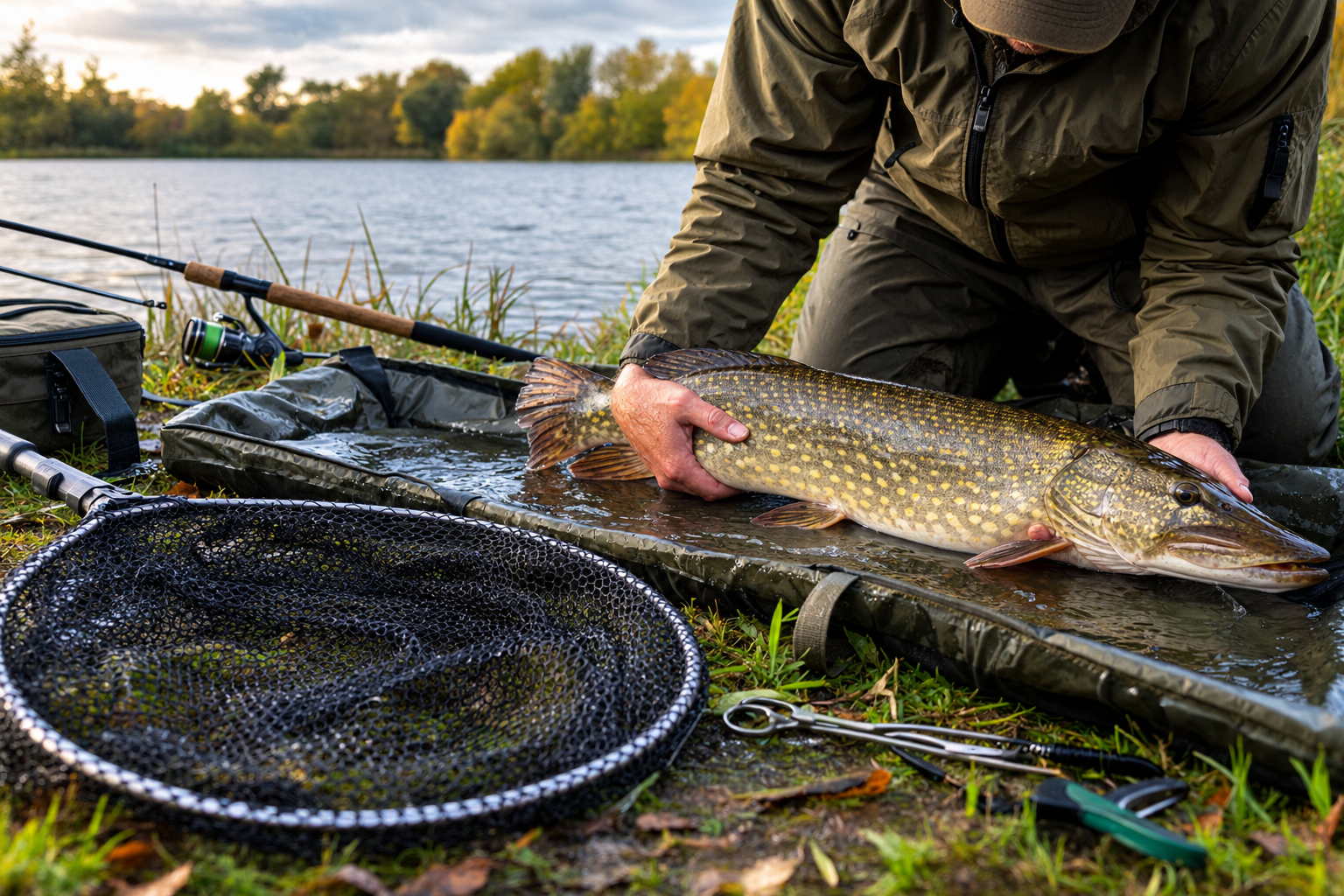
Have the Gear to Deal with All Eventualities.
There is something rather satisfying about arriving at the water, setting up your tackle and knowing you are ready for whatever the day might bring. The rods are prepared, the reels are loaded, the flies or lures are selected and, hopefully, the kettle is not far away.
But being prepared for a day's fishing is about more than simply having enough tackle to catch a fish. It is also about being properly equipped and sufficiently knowledgeable to deal with that fish once it is on the bank.
At WDAC, we want our members and guests to enjoy their fishing, but we also want every fish caught on our waters to be handled with care and returned safely. That means thinking about what might happen before making that first cast.
Catching the fish is only half the job
It is easy to concentrate on the exciting part of fishing: finding the fish, making the cast, feeling the take and playing it to the bank. But the responsibility does not end when the fish is within landing-net range.
In fact, that is when another important part of the angler's job begins.
This is particularly important when fishing for pike and large carp. Pike are powerful, hard-fighting fish and require appropriate tackle and careful handling. An angler should be confident that their equipment is capable of dealing with the fish they are targeting, rather than discovering after the hook-up that their tackle is inadequate.
Having the right tackle is only part of the equation, however. Anglers also need the knowledge, ability and correct tools to land, unhook and return their catch safely, efficiently and with the minimum possible distress to both fish... and angler.
Think about the landing before you make the cast
One of the simplest ways to prepare properly is to think through the whole process before you start fishing.
Where will you land the fish? Do you have a suitable landing net? Have you got the tools you need for unhooking? Is there a suitable unhooking mat available? Are you confident that you know how to handle the species you are targeting?
These are not questions that should be answered after the fish is on the end of the line.
WDAC recommends that members have a landing net with a minimum 24-inch diameter. A suitably sized net gives the angler a much better chance of landing a fish securely and without unnecessary struggle. It is considerably better than trying to improvise with equipment that is too small or unsuitable for the job.
A proper unhooking mat is equally important. Fish can be surprisingly vulnerable when they are out of the water, and a mat provides a safe, cushioned surface for a fish while it is being unhooked and prepared for return.
The right tools make a difference
For pike fishing in particular, suitable unhooking equipment is essential. Long forceps or appropriate unhooking tools can make the process quicker and safer, while suitable cutters should be available should they ever be needed.
The important point is that the angler should know how to use their equipment before they need it.
Watching someone else handle a pike is not necessarily the same as being able to do it yourself. If you are new to pike fishing, take the time to learn from an experienced angler and make sure you understand how to safely land, handle, unhook and return your catch.
There is no shame in asking for help. Quite the opposite. Knowing your limitations and seeking assistance when necessary is part of being a responsible angler.
Preparation protects everyone
Being properly equipped is not simply about fish welfare. It also protects the angler.
Pike are armed with an impressive set of choppers, and attempting to handle one without the appropriate knowledge or equipment can result in injury to both fish and angler. A calm, prepared angler is far more likely to deal with a difficult situation safely than someone trying to improvise.
The same principle applies to all forms of fishing. Whatever species we are targeting, our equipment should be appropriate for the fish, the conditions and the method being used.
We should also remember that conditions can change. A fish may be larger or stronger than expected. The bank may be awkward. The weather may make handling more difficult. A little preparation before fishing can prevent a great deal of trouble later.
Fish responsibly, fish confidently
Nobody goes fishing hoping to catch a fish that they are not equipped to deal with. But it can happen.
That is why preparation matters.
Coming properly equipped means that when the moment arrives and the fish is safely in the net, you can concentrate on doing the right thing rather than wondering what to do next.
At WDAC, we want our members and guests to enjoy their day's fishing safe in the knowledge that they are fully equipped to deal with their catch safely and sportingly. Good tackle, suitable landing equipment, the correct unhooking tools and the knowledge to use them properly are all part of responsible angling.
Ultimately, being prepared is about respect. Respect for the fish, respect for the water and respect for fellow anglers.
The best anglers are not simply those who know how to catch fish.
They are the ones who expect the unexpected!