
The Things Anglers Leave Behind
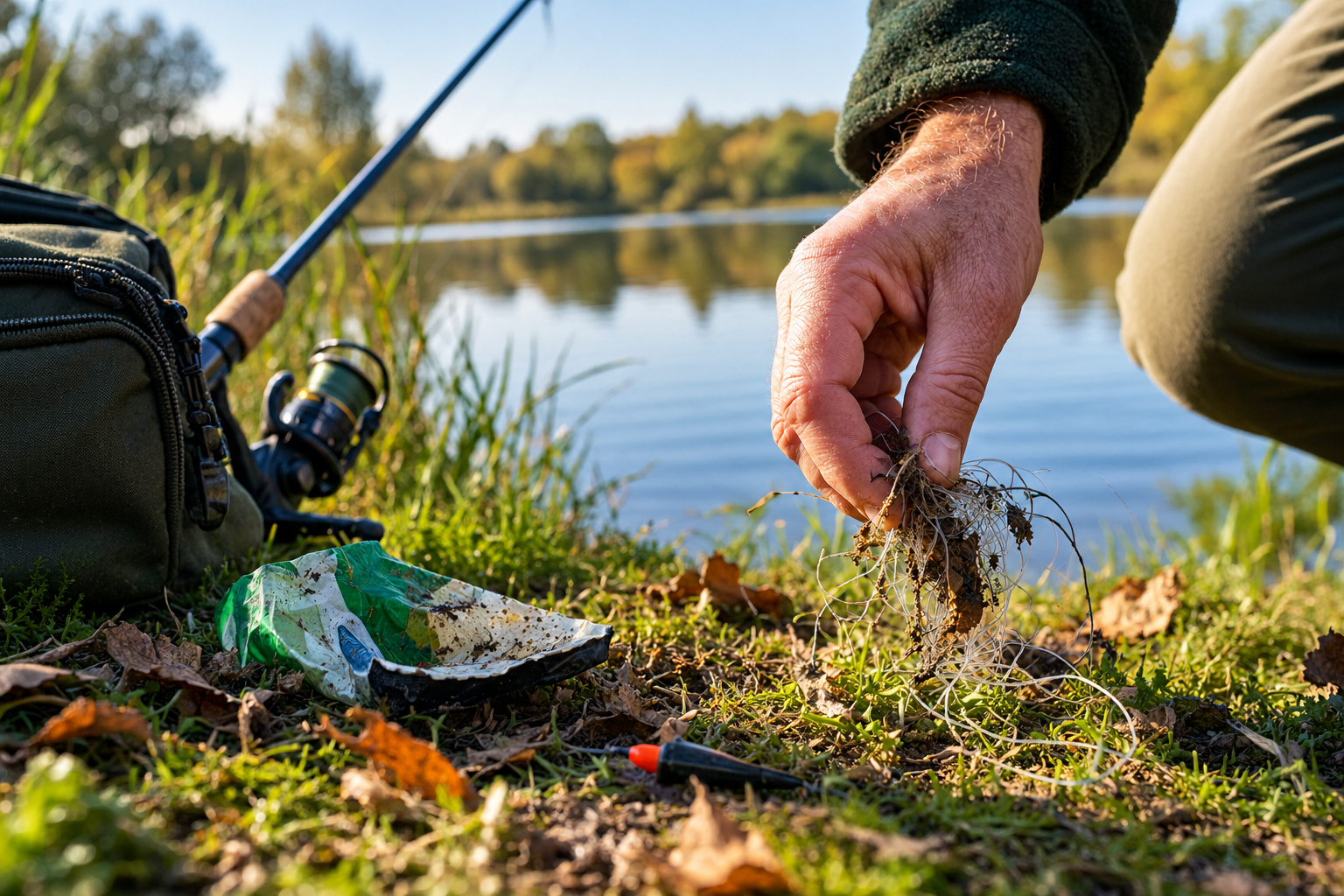
Leave it better than you found it
There is something rather satisfying about arriving at a favourite fishing spot. The tackle is ready, the water is looking good and, for a few precious hours, the rest of the world can be forgotten. Whether you're sitting quietly beside a coarse fishery or standing beside a river, fishing gives us the opportunity to enjoy some of the best places our countryside has to offer.
But there is another side to fishing that is easy to overlook.
What do we leave behind when we go home?
Ideally, nothing except footprints.
Unfortunately, that isn't always the case.
More than just litter
When we talk about responsible angling, most of us immediately think of litter. Sweet wrappers, drink cans, bait packaging and the occasional plastic bag are the obvious examples.
But some of the things an angler leaves behind can be far more problematic.
Discarded fishing line is one of them. A small piece of line lying unnoticed beside the water might seem insignificant, but it can become a serious hazard to wildlife. Birds and other animals can become tangled in it, and what takes an angler seconds to discard can remain in the environment for a very long time. The same applies to discarded hooks, traces and pieces of tackle. None of these things belong in the margins of our fisheries.
If you've brought it with you, take it home with you.
It really is that simple.
Look around before you leave
One of the easiest habits to develop is to give your swim or peg a quick check before packing up.
Look on the ground. Look around the margins. Check underneath your chair, around your tackle bag and anywhere you have been preparing bait or changing tackle.
You may be surprised by what you find.
And here's the important bit: it doesn't have to be your rubbish.
If you find somebody else's discarded line or packaging, picking it up is still worth doing.
We all benefit from the waters we fish, so we all have a part to play in looking after them.
Our fisheries belong to more than anglers
It is easy, when we're concentrating on catching fish, to think of a lake or river purely as a fishing venue.
But our waters are also home to an enormous variety of wildlife. Birds feed around the margins. Insects hatch from the water. Mammals use the banks and surrounding vegetation. Fish depend upon a healthy aquatic environment. What we leave behind can affect all of them.
That is why responsible angling isn't simply about following the Club's rules. It is about understanding that our actions have consequences beyond our own fishing session.
A length of line left in the grass may not matter to the angler who dropped it. It could matter enormously to a bird that encounters it later.
Think about the little things
Being responsible doesn't require a great deal of effort. It means putting your rubbish in your bag rather than leaving it beside the peg. It means taking used line home rather than dropping it into the bushes. It means disposing of hooks and damaged tackle safely.
It also means being careful with bait and anything else that could end up in the water where it shouldn't.
And it means reporting problems when you see them.
If a peg has accumulated rubbish, or you come across discarded tackle or damaged facilities, don't simply walk past it thinking that somebody else will deal with it.
If we all adopted that attitude, nothing would ever get done.
Leave it better than you found it!
There is an old principle that applies beautifully to fishing:
Leave the place better than you found it.
You don't need to organise a working party or spend your entire fishing session cleaning the banks. Sometimes it is simply a matter of picking up one piece of litter.
One length of discarded line. One empty packet. One hook.
Those small actions might seem insignificant, but multiplied across hundreds of anglers and thousands of fishing trips, they become something much more important.
They become part of the culture of a responsible angling club.
Set an example
There is another benefit to looking after our fisheries. Other people notice.
A well-kept fishing venue reflects well on the anglers who use it. It demonstrates that we value the environment, respect the countryside and understand that fishing comes with responsibilities as well as privileges. It also sets an example for newer anglers.
If someone starting out in fishing sees experienced anglers picking up litter, collecting discarded line and leaving their peg tidy, they learn that this is simply what responsible anglers do. And that is perhaps the best way to protect our waters in the long term.
Not through rules alone, but through habit.
Before you go home...
So, next time you finish a day's fishing, PLEASE take an extra minute before you leave.
Look around your peg.
Have you taken everything with you?
Is there any line lying in the margins?
Any packaging on the ground?
Any discarded tackle that could be removed safely?
If there is, pick it up.
Because fishing gives us access to some wonderful places. We have the privilege of spending time beside them, enjoying them and, hopefully, catching a few fish along the way.
The least we can do is leave them in good condition for the next angler — and for the wildlife that calls them home.
Take nothing that shouldn't leave with you. Leave nothing that shouldn't be there.
And perhaps, most importantly, leave the water looking just as good — or a little better — than when you arrived.
Because the things we leave behind say rather a lot about the anglers and society we are.