
The Mystery of the Invisible Bite
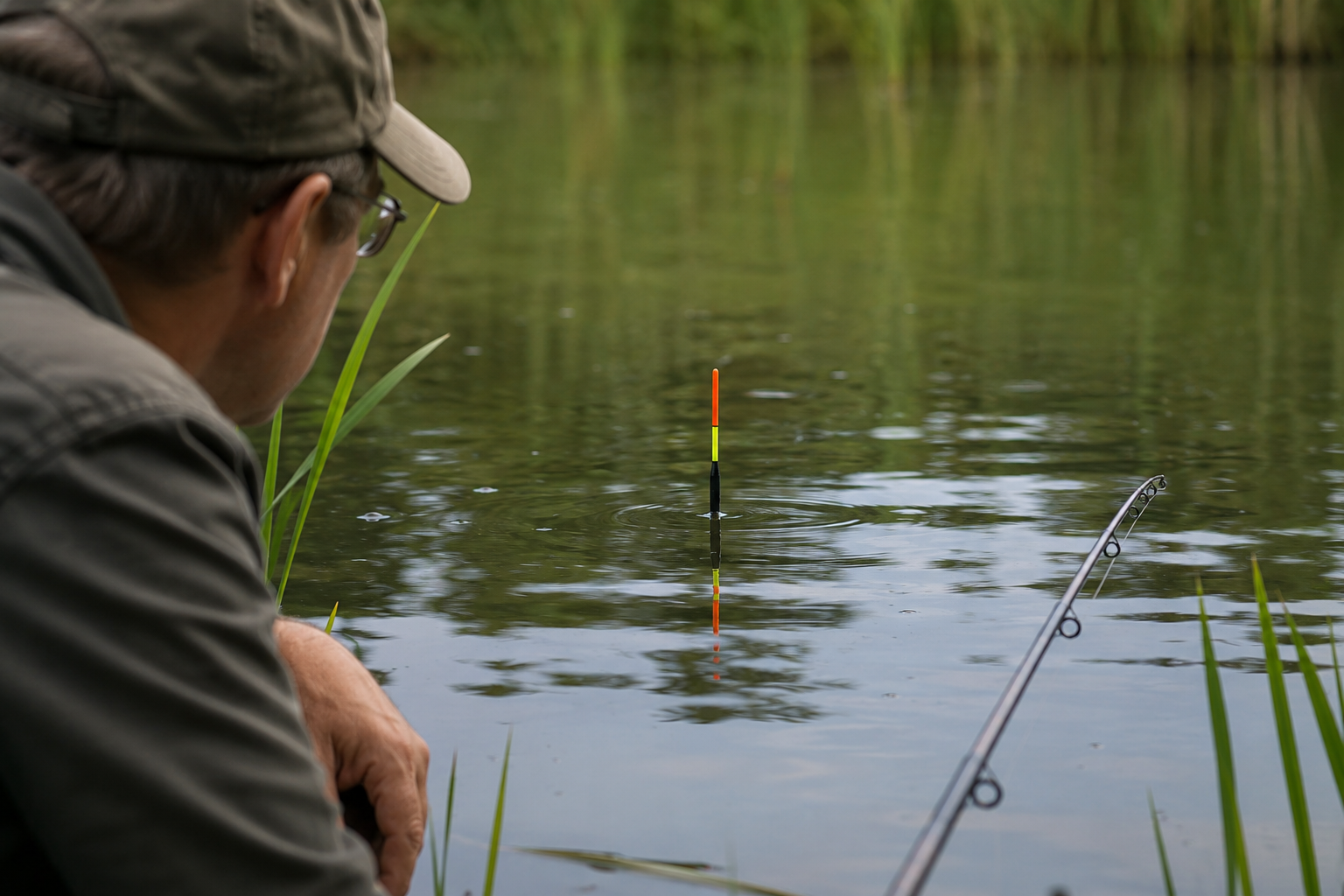
Patience is a virtue anglers don’t possess.
There are few moments in coarse fishing quite as confusing as catching a fish you never realised had actually taken your bait.
You’ve cast out. The float is sitting nicely. Everything looks exactly as it should. You’re watching carefully, waiting for that unmistakable plunge beneath the surface.
Nothing happens.
Then, just as you’re starting to wonder whether there are any fish in the swim at all, you lift the rod to recast and discover there’s a fish attached.
Congratulations. You’ve just experienced the invisible bite.
When Nothing Looks Like Something
For beginners, one of the hardest things about float fishing is learning that a bite doesn’t always look like a bite.
We tend to imagine a fish taking the bait with enthusiasm and disappearing with the float. Sometimes that happens. But quite often, particularly when fish are feeding cautiously, the signs can be much more subtle.
The float might tremble.
It might lift slightly.
Perhaps it moves a fraction to one side before settling again. Maybe it dips just enough for you to wonder whether you actually saw it happen.
The problem is that your brain is waiting for something dramatic.
The fish, meanwhile, has absolutely no obligation to make life easy for you. THEY NEVER DO!
Your Float Is Talking to You
One of the most useful skills you can develop as a coarse angler is learning to read your float.
It isn't simply there to tell you where your hook is. It is your connection to what's happening beneath the surface.
Watch what the float normally does. Notice how it sits when everything is behaving naturally. Learn how wind affects it. See how it responds when your bait settles.
Then watch for anything that looks different.
A tiny dip could be a fish mouthing the bait. A slight lift might mean the weight has been disturbed. A sideways movement could indicate a fish has picked up the bait and started to move.
Not every movement is a bite, of course. But ignoring every small indication because it isn't dramatic is a sure way to miss fish.
The Bite That Doesn't Happen
Perhaps the most frustrating indication is the one where the float simply stops behaving normally.
You've got a gentle ripple across the surface and your float is moving naturally with it. Then suddenly it stops.
It doesn't disappear.
It doesn't shoot away.
It just stops.
That can be a bite.
A fish may have picked up the bait and be holding it without moving far enough to pull the float under. If you continue waiting for the float to vanish, you could be waiting a very long time.
This is where experience starts to make a difference. The more you fish, the better you become at recognising when something doesn't quite look right.
Don't Strike at Everything
There is, however, another trap.
Once you learn that bites can be subtle, it's tempting to strike at absolutely everything.
The float moves.
Strike.
The wind catches it.
Strike.
A leaf floats past.
Strike.
Someone two pegs away sneezes.
Strike.
Before long, you're spending more time striking than actually fishing.
The answer isn't to react to every movement. It's to understand what your float normally does and look for changes that suggest something beneath the surface has disturbed the presentation.
That takes observation rather than guesswork.
Give Your Float Your Full Attention
It's surprisingly difficult to watch a float properly for any length of time.
After twenty minutes without a bite, your concentration starts to wander. You look at another angler. You check your tackle box. You wonder whether you've got enough bait. You start thinking about lunch.
And that's usually when the float decides to do something interesting.
For beginners, learning to maintain concentration is almost as important as learning to cast.
Watch the float closely, but don't stare at it so intensely that every ripple becomes a potential fish. Stay relaxed and learn its normal behaviour.
The more familiar you become with your setup, the easier it becomes to recognise something unusual.
Small Changes Can Make a Big Difference
If you're regularly missing indications, don't automatically assume you need a completely different rig.
Sometimes a small adjustment is all that's required.
Your float may be set too deep or too shallow. The shotting may not be giving you the sensitivity you need. Your hookbait could be too large. You might simply be fishing with too much slack line between yourself and the float.
These things affect how clearly a bite is transmitted.
A sensitive, well-balanced float setup gives you much more information than a heavy, poorly presented one.
And the more information you receive, the more chances you have to respond.
The Moment It Clicks
Eventually, you'll experience that satisfying moment when everything comes together.
The float behaves normally.
Then it does something different.
You recognise it.
You lift the rod.
The rod bends.
Suddenly, the mystery disappears and you're connected to a fish.
It might only be a modest roach or perch, but you'll probably remember it because you saw the bite rather than simply getting lucky.
That is one of those small milestones that marks progress as an angler.
Learn to See the Invisible
Coarse fishing isn't always about spectacular floats disappearing beneath the surface.
Sometimes it's a tiny tremble.
Sometimes it's a slight lift.
Sometimes it's a float that simply stops when it shouldn't.
Learning to recognise those little clues can transform your fishing. Instead of waiting for the fish to make the bite obvious, you start learning to interpret what it's telling you.
And when you finally lift the rod and discover there's a fish attached to a bite you almost missed, you'll understand why experienced anglers can spend hours staring at a float without ever seeming bored.
They're not waiting for nothing to happen.
They're watching for everything.