
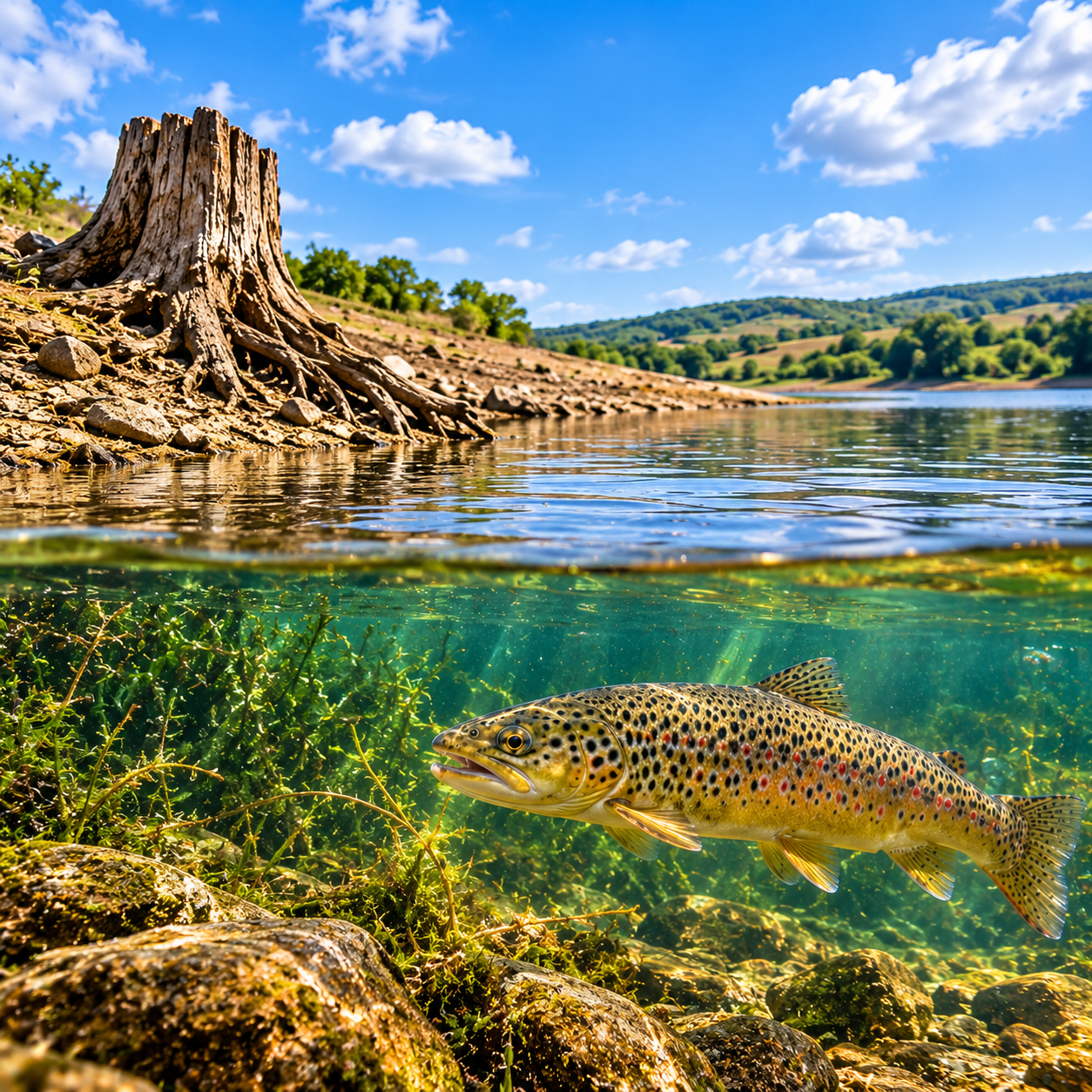
Hot Weather Can Change our Fisheries
When we think about drought, the first thing that usually comes to mind is falling water levels. We notice exposed banks, shrinking margins and lakes that look rather different from the ones we remember fishing only a few months earlier. For anglers, it's an obvious and sometimes worrying change. But there is considerably more happening than simply watching the water disappear.
A prolonged period of dry weather can have a significant effect on an entire fishery, influencing everything from the trout themselves to the insects they feed on, the aquatic plants that provide habitat and the delicate balance that keeps a lake healthy. Much of this activity takes place beneath the surface, out of sight of the angler standing on the bank.
So what actually happens to a fishery when the rain stops falling as has happened at W. Zelston?
Less water, more pressure
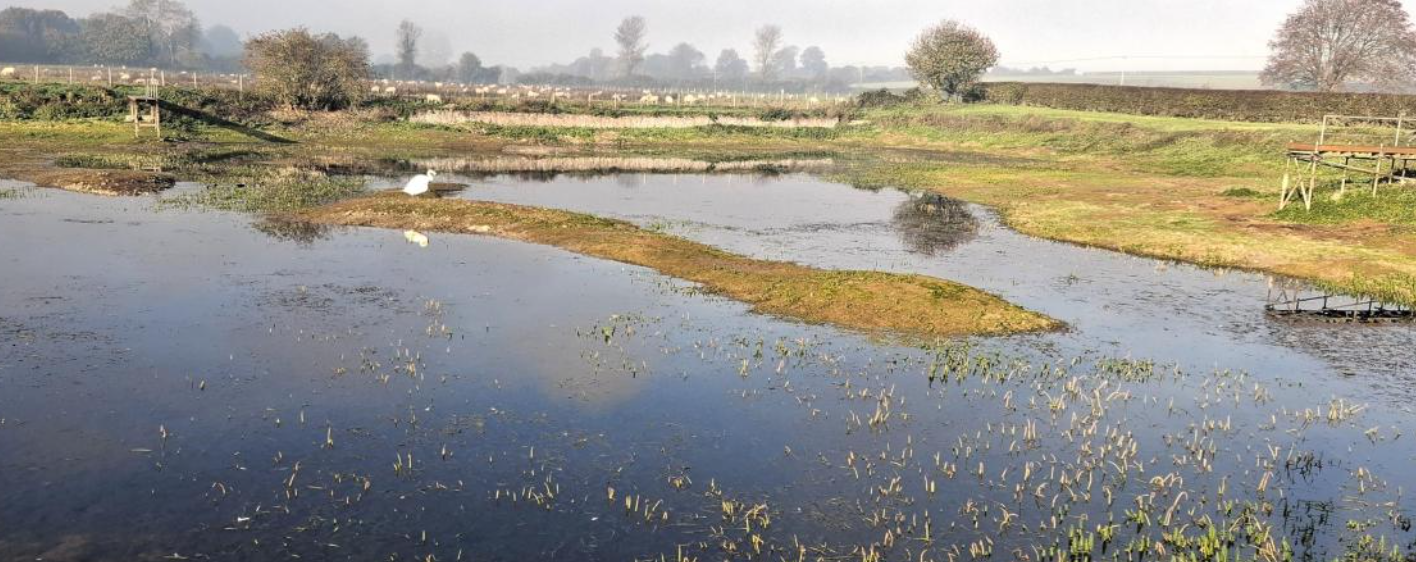
Winterbourne Zelston October 2026
One of the most immediate effects of drought is a reduction in the volume of water available. As levels fall, the lake becomes smaller and areas that were once comfortably underwater may become exposed.
For trout, this can mean losing access to some of their habitat. Shallow margins, weed beds and sheltered areas may become reduced or disappear altogether. Fish can find themselves with fewer places to feed, shelter and move around. There is also the question of water temperature. With less water available, the remaining volume can warm more quickly during prolonged hot weather, particularly in shallow areas exposed to direct sunlight.
This matters because trout are cold-water fish. They are sensitive to temperature changes, and warmer conditions can increase their physiological stress. Higher temperatures can also increase their oxygen requirements at precisely the time when the water may be less capable of supplying it.
The oxygen problem
Oxygen is essential to every fishery, but it is something we rarely think about when looking across a lake.
Water naturally contains dissolved oxygen, supplied through contact with the atmosphere, wind-driven surface movement and photosynthesis by aquatic plants and algae. However, the amount of oxygen water can hold decreases as its temperature rises.
During a hot, dry summer, this can create a difficult situation for trout. Warmer water holds less oxygen, while fish generally require more oxygen as their metabolism increases with temperature. The situation can become more complicated when large quantities of algae or aquatic vegetation are involved. Plants produce oxygen during daylight through photosynthesis, but they also consume oxygen through respiration, including at night. When substantial amounts of plant material die and decompose, bacteria use oxygen in the process.
Under certain conditions, this combination can contribute to dangerously low oxygen levels, particularly in deeper or poorly circulated areas of a lake. It is one of the reasons why prolonged hot weather can be particularly challenging for still water fisheries.
What happens to the insects?
It's easy to concentrate on the trout, but a healthy fishery depends on a much wider food chain. Aquatic insects are an essential part of that chain. Buzzers, damsels, water boatmen and other invertebrates provide an important food source for trout, while their presence is closely connected to the condition of the lake.
Falling water levels can affect the habitats in which these creatures live and develop. Marginal vegetation may dry out, previously submerged areas can become exposed, and shallow habitats can experience significant changes in temperature and water quality.
Some insect species are better equipped than others to cope with these changes. Certain insects have life cycles that allow them to survive periods of drying, while others are more dependent on permanently submerged habitat. The result can be changes in the abundance and variety of aquatic life, with potential consequences for the trout's natural food supply.
In other words, a drought doesn't just affect the fish. It can affect their dinner menu too.
The changing role of aquatic plants
Aquatic vegetation is another important part of a healthy lake. Weed beds provide shelter, support insect life, offer feeding opportunities and contribute to the overall structure of the underwater environment.
When water levels fall, these plants can become exposed or experience conditions very different from those in which they normally grow. Some may survive and recover when water returns, while others may be damaged or lost. This can have consequences beyond the plants themselves. Insects lose habitat, small organisms lose shelter and trout may lose areas where they would normally hunt or find protection. However, aquatic weed isn't necessarily the enemy of a fishery. In the right balance, it is an important part of the ecosystem. Maintaining that balance is one of the challenges of managing healthy stillwaters.
Why filling the lake isn't the whole answer
When the rain eventually arrives, there is understandably a feeling of relief. Water levels begin to rise, exposed margins disappear and the lake starts to look familiar again.
But recovery is not simply a matter of putting the water back.
The ecological effects of drought can take considerably longer to reverse. Aquatic vegetation needs time to recover, insect populations may need time to rebuild and water quality can change as fresh water enters the system.
Even the trout may take time to adjust to changing conditions.
A lake is a living environment, and its different components don't necessarily recover at the same speed. A return to normal water levels is certainly encouraging, but it doesn't automatically mean that every aspect of the fishery has returned to normal.
What can we do as anglers?
Although the weather is beyond our control, there are things we can do to help protect our fisheries during difficult conditions.
Being aware of water temperatures and the condition of the fish is important. During particularly warm periods, fishing may need to be restricted or suspended if conditions become unsuitable. This is especially relevant for trout, which can be vulnerable to additional stress when water temperatures are high.
Good fishery management plays an equally significant role. Monitoring water levels, temperature and oxygen, understanding changes in aquatic vegetation and keeping an eye on water quality all help inform decisions about protecting the fishery. These are not always visible activities, but they are an important part of maintaining healthy waters and something which we taker very seriously at WDAC.
Looking after the bigger picture
A drought reminds us that a fishery is about much more than the fish we hope to catch. It is an interconnected environment in which water, plants, insects, oxygen and fish all depend on one another.
We can spend hours discussing flies, tackle, casting techniques and the latest fishing methods, but none of those things matter very much if the environment beneath the surface isn't healthy.
Perhaps the most important lesson is that we should never take our waters for granted. A healthy lake is the result of a delicate natural balance, and prolonged dry weather can put that balance under considerable pressure. As anglers and members of WDAC, we all have an interest in protecting the waters we enjoy. Understanding what happens during a drought is a good place to start.
Because the next time you stand beside a full lake, watching a trout rise in the distance, it's worth remembering just how much has to happen beneath that peaceful surface to make it possible.
A healthy fishery doesn't happen by accident. It's something we all have a responsibility to value and protect.