
The Hidden Life of Our Rivers and Lakes: Why Healthy Water Matters to Every Angler
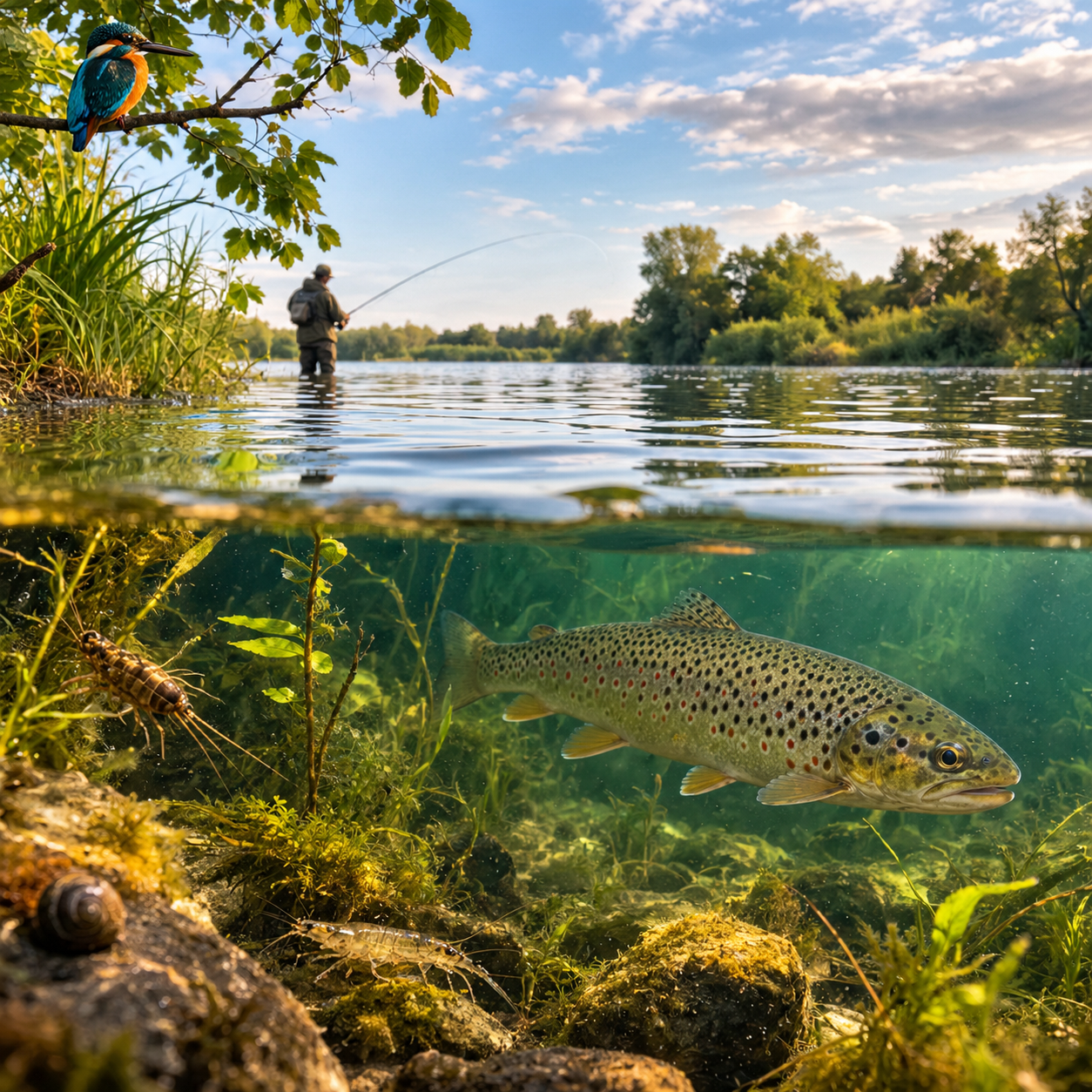
The target hiding beneath!
When we arrive at the water’s edge, it is easy to focus on what lies at the end of our line. We think about the fish we hope to catch, the tactics we intend to use and the tackle we have chosen. But whether we are fishing a flowing river or a quiet stillwater, there is an entire world beneath the surface that plays a vital role in our angling.
Healthy waters are about far more than the fish we catch. They depend on a delicate balance of habitats, aquatic insects, oxygen, vegetation and natural food sources. Understanding this hidden world helps us become better anglers and reminds us why protecting our fisheries matters.
A World Beneath the Surface
Rivers and stillwaters may look very different, but both support complex ecosystems.
In rivers, flowing water moves nutrients and oxygen through the system, while gravel beds, deeper pools, riffles and sheltered margins provide different habitats for fish and invertebrates. These varied environments offer places to feed, rest, hide from predators and reproduce.
Stillwaters have their own distinctive character. Lake and pond margins, submerged plants, gravel beds, silty areas and deeper water all provide habitats for different species. Aquatic vegetation can offer shelter for young fish and invertebrates, while the surrounding bankside environment can provide shade, food and protection.
The condition and variety of these habitats influence the wildlife they support and, ultimately, the fishing we enjoy.
The Little Creatures That Make a Big Difference
One of the most important parts of any healthy aquatic environment is its population of invertebrates. These include insect larvae, freshwater shrimps, snails, worms and other small creatures that form an essential part of the food chain.
For trout and other river fish, mayfly, caddisfly and stonefly nymphs can be important food sources. In stillwaters, aquatic insects, midge larvae, freshwater shrimps and other small organisms also provide valuable natural food for fish.
These creatures are not just a convenient meal for hungry fish. Their presence and variety can also tell us something about the condition of the water. Some aquatic invertebrates are particularly sensitive to pollution and changes in their environment, making them useful indicators of river health.
Organisations such as Dorset Wildlife Trust support riverfly monitoring, in which trained volunteers examine aquatic invertebrates to help assess the condition of rivers. It is a useful reminder that the smallest creatures can tell us a great deal about the waters we value.
Oxygen: The Invisible Essential
Fish need oxygen dissolved in the water to survive, and the amount available can vary considerably.
In rivers, turbulence and the movement of water can help oxygen enter the system. In stillwaters, oxygen levels can be influenced by temperature, water depth, wind, aquatic plants and the balance between photosynthesis and respiration.
Warm weather can be particularly challenging. Warmer water holds less dissolved oxygen than colder water, while fish and other aquatic organisms may use oxygen more rapidly as temperatures rise. In some circumstances, particularly in nutrient-rich waters, oxygen levels can fall dangerously low.
Excess nutrients and organic pollution can also upset the balance. As organic material breaks down, the process can consume oxygen, potentially placing fish and other aquatic life under considerable stress.
This is why water quality is so important, whether we are casting into a flowing chalk stream or fishing a club lake on a warm summer afternoon.
When the Balance Goes Wrong
Aquatic habitats can be affected by a variety of pressures. Pollution, agricultural run-off, sewage discharges, excessive nutrients, sediment, loss of vegetation and changes in water levels can all have consequences.
In rivers, abstraction, barriers to fish movement and damage to natural banks and gravel beds can further affect habitats. In stillwaters, nutrient enrichment, excessive algal growth, loss of marginal vegetation and poorly managed banks can also create problems.
The effects may not always be immediately obvious. A water can look attractive from the bank while important parts of its ecosystem are struggling beneath the surface.
Healthy fish populations depend on much more than stocking levels or the amount of food available. They need suitable habitats, good water quality, adequate oxygen and a functioning natural food chain.
What Can Anglers Do?
As anglers, we have a responsibility to help protect the places we fish. The good news is that small actions do make a genuine difference.
Always take litter home, including discarded line, hooks and packaging. Never dispose of bait, groundbait or other materials carelessly, and follow the rules for the fishery you are visiting. Avoid damaging bankside vegetation, disturbing sensitive habitats or trampling marginal plants unnecessarily.
When handling fish, use appropriate tackle and landing equipment, minimise handling time and return fish carefully where catch-and-release applies. On warm days, be particularly mindful of fish welfare and any fishery guidance concerning conditions that may place fish under stress.
We should also report suspected pollution, fish distress or significant changes in water conditions to the appropriate fishery management team or environmental authority. If we notice unusual algal growth, discoloured water or unexplained fish deaths, it is better to raise the concern than simply assume someone else will deal with it.
Club members can also help by supporting practical conservation work, respecting fishery rules and encouraging others to treat our waters with care.
Protecting the Future
Whether we enjoy the challenge of a river trout, the excitement of a stillwater take or the steady pleasure of fishing a club lake, we depend on healthy aquatic environments.
The insects we rarely notice, the oxygen we cannot see and the habitats hidden beneath the surface all contribute to the fishing experience we value. When these elements are in balance, fish have a better chance of thriving and our waters can support a rich variety of wildlife.
At Wimborne and District Angling Club, looking after our fishing means looking beyond the next catch. It means recognising that every water is part of a wider natural system and that the choices we make as anglers can help protect it.
The next time you settle beside a river or stillwater, take a moment to look beyond the surface. There is far more going on down there than meets the eye, and the health of that hidden world is something every angler has a stake in.